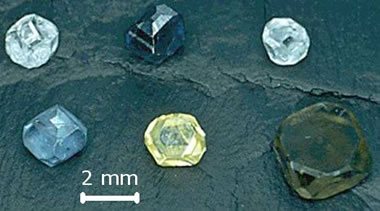
Diamond is a very valuable material, and people have been working for centuries to create them in laboratories and factories. Synthetic diamonds are man-made materials that have the same chemical composition, crystal structure, optical properties and physical behavior as natural diamonds. Other names used for synthetic diamonds include: “lab-grown,” “lab-created,” and “man-made”. These names properly indicate that the diamonds were not naturally formed in the Earth, but were instead created by people.
The first commercially successful synthesis of diamond was accomplished in 1954 by workers at General Electric. Since then, many companies have been successful at producing synthetic diamond suitable for industrial use. Today, most of the industrial diamond consumed is synthetic, with China being the world leader with a production of over 4 billion carats per year. Most important industrialized nations are now able to produce synthetic diamonds for industrial use in factories.
In the last decade, several companies have developed technology that enables them to produce gem-quality laboratory-created diamonds up to a few carats in size in several different colors – including colorless. Some companies use high-pressure, high-temperature methods – these are known as HTHP diamonds. Others create diamonds using a chemical vapor deposition process – these are known as CVD diamonds. These man-made gems are being sold in jewelry stores and on the internet at a significant discount to natural stones of similar quality and size. They have a beautiful appearance and an attractive price tag. Synthetic diamonds are required to be sold with a disclosure that enables the buyer to clearly understand that they were made by people.