LIMESTONE, DOLOSTONE, AND MARBLE
Some rocks contain carbonate minerals, and the acid test can be used to help identify them. Limestone is composed almost entirely of calcite and will produce a vigorous fizz with a drop of hydrochloric acid. Dolostone is a rock composed of almost entirely of dolomite. It will produce a very weak fizz when a drop of cold hydrochloric acid is placed upon it, a more obvious fizz when powdered dolostone is tested, and a stronger fizz when hot hydrochloric acid is used.
Limestone and dolostone can be a little more complex. They are sometimes composed of a mixture of calcite and dolomite and have acid reactions that are deceptive. A dolostone can contain enough calcite to fool you into calling it a limestone. For these rocks the acid test might not be enough for a confident identification – but at least you will know that the rock has a significant carbonate mineral content.
Marble is a limestone or a dolostone that has been metamorphosed. It will have an acid reaction that is similar to the limestone or dolostone from which it was formed.
OTHER ROCKS THAT FIZZ
Always remember that “calcite is ubiquitous.” (Ubiquitous means that it is found almost everywhere.)
Many rocks contain small amounts of calcite or other carbonate minerals. All of these can produce a fizz even though the carbonate is only a minor part of a rock’s composition. These rocks might contain small veins or crystals of carbonate minerals that produce a fizz in contact with acid. These veins and crystals can be so tiny that they are not visible to the unaided eye. This small amount of carbonate might fizz the first time a drop of acid is applied but be depleted and not fizz if acid is applied a second time to the same location on the rock.
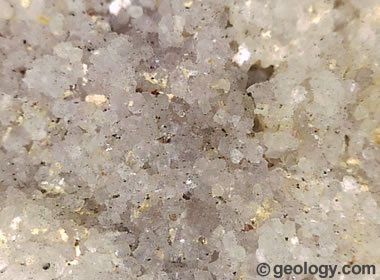
Some sedimentary rocks are bound together with calcite or dolomite cement. Sandstone, siltstone, and conglomerate sometimes have calcite cement that will produce a vigorous fizz with cold hydrochloric acid. Some conglomerates and breccias contain clasts of carbonate rocks or minerals that react with acid.
Many shales were deposited in marine environments and contain enough calcium carbonate to produce a vigorous acid fizz. These shales were formed when mud was deposited in an environment similar to or adjacent to where limestone was formed. They are composed of sedimentary clay minerals intermixed with a small amount of calcite. They are known as “calcareous shales.”
Don’t allow an acid fizz to guide the identification process. In many cases it will instead add detail to your observation such as: “calcareous shale” or “sandstone with carbonate cement.” This is valuable information.
EXTREME ACID REACTIONS
A few rocks can produce an extreme reaction with hydrochloric acid. These are usually rocks composed of calcite or aragonite with abundant pore space or extremely high surface areas. Some specimens of chalk, coquina, oolite, and tufa are examples. When a drop of dilute hydrochloric acid is placed on these specimens, an eruption of acid foam can rise up off of the rock and spread to an unexpected diameter. The reaction is very brief (and may not be repeatable), but it is so sudden and vigorous that it can surprise an inexperienced person. This description is for one drop of acid. If more is used an even more vigorous reaction will occur. (These extreme reactions will not occur with every specimen of these rocks. Be aware when testing them or presenting them to students for testing.)
The extremely vigorous reaction of cold hydrochloric acid with these specimens occurs because the rocks are so porous or because they have a very high surface area under a single drop of acid.
TEST UNWEATHERED MATERIAL
Calcite and other carbonate minerals have a low resistance to weathering and can be attacked by acids in natural waters and soils. When testing material that has been exposed at Earth’s surface, it is very important to test unweathered material. A fresh surface can usually be obtained by breaking the rock.
DECEIVED BY POROSITY!
Some rocks are porous and contain a reservoir of air. Small amounts of air escaping into a drop of acid from below can give the appearance of a gentle acid reaction. Don’t be fooled. If you place a drop of acid on some sandstones, a few bubbles will emerge out of pore spaces. It’s not a carbonate cement. To avoid this problem scratch the rock across a streak plate and test the powder or the grains that are produced.