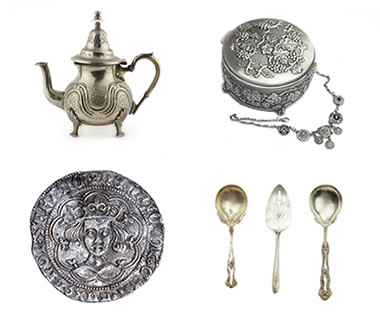
Silver, the white metal, has an illustrious reputation for its use in jewelry and coins, but today, silver’s primary use is industrial. Whether in cell phones or solar panels, new innovations are constantly emerging to take advantage of silver’s unique properties.
Silver is a precious metal because it is rare and valuable, and it is a noble metal because it resists corrosion and oxidation, though not as well as gold. Because it is the best thermal and electrical conductor of all the metals, silver is ideal for electrical applications. Its antimicrobial, non-toxic qualities make it useful in medicine and consumer products. Its high luster and reflectivity make it perfect for jewelry, silverware, and mirrors. Its malleability, which allows it to be flattened into sheets, and ductility, which allows it to be drawn into thin, flexible wire, make it the best choice for numerous industrial applications. Meanwhile, its photosensitivity has given it a place in film photography.
Because it is more abundant, silver is much less expensive than gold. Silver can be ground into powder, turned into paste, shaved into flakes, converted into a salt, alloyed with other metals, flattened into printable sheets, drawn into wires, suspended as a colloid, or even employed as a catalyst. These qualities ensure that silver will continue to shine in the industrial arena, while its long history in coinage and jewelry will sustain its status as a symbol of wealth and prestige.