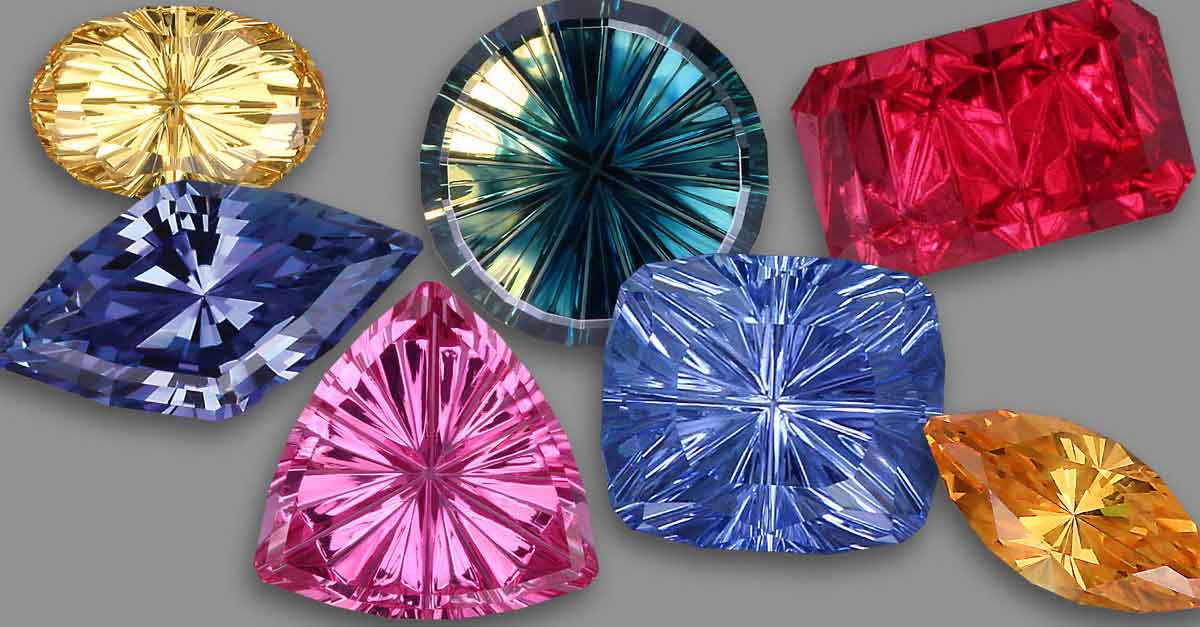
In the gemstone and jewelry market, almost all of the attention goes to a small group of gems known as “the big four”: diamond, ruby, sapphire, and emerald. Two of these, ruby and sapphire, are gem corundums.
These most popular gems are highly sought after and have been mined in many parts of the world for thousands of years. Today, millions of rubies and sapphires are required every year to meet the demands of the jewelry market — from inexpensive commercial stones sold in malls and department stores to spectacular specimens used in designer and custom jewelry. The demand for attractive stones exceeds the abilities of mines to supply. As a result, the prices paid for attractive natural stones have risen to high levels.
When a consumer wants a “ruby ring” or a “sapphire pendant,” they are generally not interested in substituting a red spinel, blue iolite, or other attractive gem of similar color. They want “ruby” or they want “sapphire.” Retail jewelers, especially those selling pieces and sets for under $500, have been increasingly presenting synthetic or “lab-created” gems alongside the natural stones in their display cases.
The synthetic materials have the same aluminum oxide composition and crystal structure as natural rubies and sapphires. Their color is also produced by the same trace elements (chromium for ruby and iron with titanium for sapphire).
They have the same optical appeal and usually a better physical appearance than similar-size natural stones of the same price. As a result, many consumers now gladly purchase synthetic stones because they receive a more attractive product at a price that they can afford. Over the long term, synthetic gems are likely to continue displacing natural stones from the market, especially in the lower and middle price ranges where consumers are very conscious about price.
There is nothing wrong with selling or purchasing jewelry that contains synthetic gemstones as long as two conditions are met: 1) the seller must disclose the fact that the gemstones are products of man rather than products of nature; and, 2) the buyer clearly understands that the gemstones are synthetic and made by people rather than being products of nature.