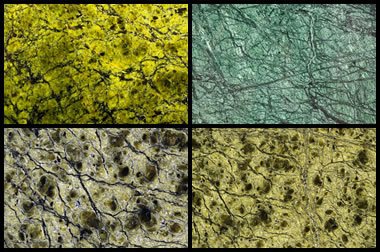
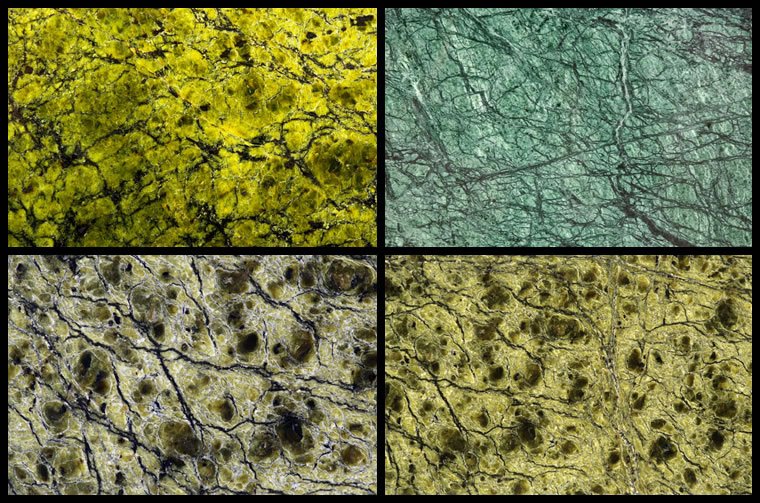
Serpentine has been used as an architectural stone for thousands of years. It is available in a wide variety of green and greenish colors, often has an attractive pattern, works easily, and polishes to a nice luster. It has a Mohs hardness of 3 to 6 which is softer than granite, and usually harder than most marble. This low hardness limits its appropriate use to surfaces that will not receive abrasion or wear, such as facing stone, wall tiles, mantles, and window sills.
Serpentine was popular in the United States during the first half of the 20th century and is less popular today. The decline in popularity is partly related to concerns about worker safety and the possible asbestos content of the stone.
In the dimension stone trade, serpentine is often sold as “marble.” It might also be described as “serpentine marble” or given a trade name that does not include the word “serpentine.” This is a tradition of the industry and is usually not a misidentification of the material. This practice severely irritates some geologists.