The name “topaz,” and variants of the name in other languages, have been used for yellowish gemstones for at least two thousand years. At that time yellowish gems were called “topaz” in many parts of the world. Many of the earliest gem traders did not realize that these yellowish stones were actually different materials.
Then, about two hundred years ago, people who traded in gems began to realize that these yellowish gems might be topaz, quartz, beryl, olivine, sapphire, or one of many other minerals. They also learned that topaz occurred in a wide range of colors other than yellow.
If you visited a jewelry store as recently as fifty years ago and asked to see topaz jewelry, you would likely have been shown gems that were in the color range of yellow, orange, and brown. Those were the common colors of topaz being sold at that time.
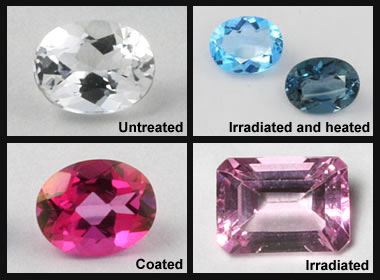
Then, starting in the 1970s and 1980s, the most common color that you would be shown began to be a beautiful blue. This blue color was usually produced by treatments that converted colorless topaz into a more marketable gemstone.