Dolomite and limestone are used in similar ways. They are crushed and used as an aggregate in construction projects. They are kiln-fired in the manufacture of cement. They are cut into blocks and slabs for use as a dimension stone. They are calcined to produce lime. In some of these uses, dolomite is preferred. Its greater hardness makes it a superior construction material. Its lower solubility makes it more resistant to the acid content of rain and soil.
The dolomitization process results in a slight volume reduction when limestone is converted into dolomite. This can produce a porosity zone in the strata where dolomitization has occurred. These pore spaces can be traps for subsurface fluids like oil and natural gas. This is why dolomite is often a reservoir rock that is sought in the exploration for oil and natural gas. Dolomite can also serve as a host rock for lead, zinc, and copper deposits.
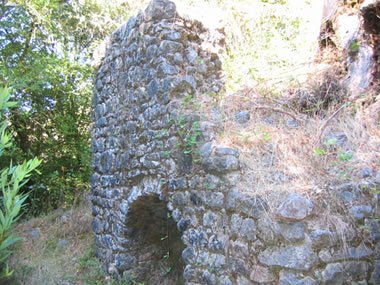
In the chemical industry, dolomite is used as a source of magnesia (MgO). The steel industry uses dolomite as a sintering agent in processing iron ore and as a flux in the production of steel. In agriculture, dolomite is used as a soil conditioner and as a feed additive for livestock. Dolomite is used in the production of glass and ceramics. Dolomite has been used as a minor source of magnesium, but today most magnesium is produced from other sources.