Pegmatite rock has very few uses. However, pegmatite deposits often contain gemstones, industrial minerals, and rare minerals.
ARCHITECTURAL STONE
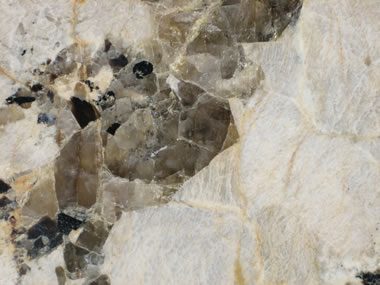
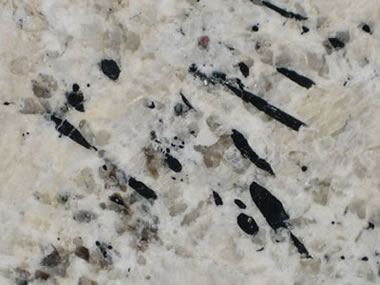
Pegmatite rock has limited use as an architectural stone. Occasionally it is encountered in a dimension stone quarry that produces granite for architectural use. If the pegmatite is sound and attractive, it might be cut into slabs and polished for building facing, countertops, tile or other decorative stone products and sold commercially as a “granite.”
GEMSTONE MINING
Some of the world’s best gemstone mines are in pegmatites. Gemstones found in pegmatite include: amazonite, apatite, aquamarine, beryl, chrysoberyl, emerald, garnet, goshenite, heliodor, kunzite, lepidolite, morganite, spodumene, topaz, tourmaline, zircon, and many others. Large crystals of excellent-quality material are often found in pegmatite.
RARE MINERALS
Pegmatite is the host rock for many rare mineral deposits. These minerals can be commercial sources of: beryllium, bismuth, boron, cesium, lithium, molybdenum, niobium, tantalum, tin, titanium, tungsten, and many other elements. In most cases the mining operations are very small, employing less than a dozen people. If the mine contains nice crystals, the minerals are often more valuable as mineral specimens and faceting rough than being sold as an ore.
INDUSTRIAL MINERALS
Pegmatite is often mined for industrial minerals. Large sheets of mica are mined from pegmatite. These are used to make components for electronic devices, retardation plates, circuit boards, optical filters, detector windows, and many other products. Feldspar is another mineral frequently mined from pegmatite. It is used as a primary ingredient for making glass and ceramics. It is also used as a filler in many products.