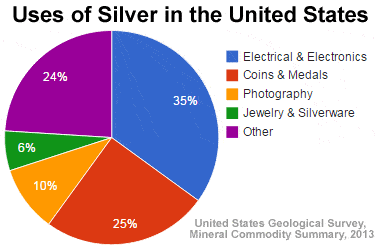
The number one use of silver in industry is in electronics. Silver’s unsurpassed thermal and electrical conductivity among metals means it cannot easily be replaced by less expensive materials.
For example, small quantities of silver are used as contacts in electrical switches: join the contacts, and the switch is on; separate them and the switch is off. Whether turning on a bedroom light using a conventional switch or turning on a microwave using a membrane switch, the result is the same: the current can pass through only when the contacts are joined. Automobiles are full of contacts that control electronic features, and so are consumer appliances. Industrial strength switches use silver, too.
How does silver get from the earth to these electronic devices? Silver comes from silver mines or from lead and zinc mines from which silver is a by-product. Smelting and refining removes silver from the ore. Then, the silver is usually shaped into bars or grains. Electronics demand silver of the highest purity: 99.99% pure, also known as having a fineness of 999.9.
Dissolving pure silver in nitric acid produces silver nitrate, which can be formed into powder or flakes. This material, in turn, can be fabricated into contacts or silver pastes, like conductive paste made with a silver-palladium alloy.
Silver paste has many uses, such as the membrane switch already mentioned and the rear defrost in many cars. In electronics, circuit paths, as well as passive components called multilayer ceramic capacitors (MLCCs), rely on silver paste. One of the fastest growing uses of silver paste is in photovoltaic cells for the production of solar energy.
Nanosilver, silver with an extremely small particle size (1-100 nanometers, that is 1-100 billionths of a meter), provides a new frontier for technological innovation, requiring much smaller amounts of silver to get the job done. Printed electronics work by using nanosilver conductive inks. One example of a printed electronic is the electrode in a supercapacitor, which can charge and discharge repeatedly and quickly. Regenerative breaking is an automotive innovation that allows the kinetic energy of a slowing vehicle to be stored in a supercapacitor for reuse. Radio frequency identification (RFID) tags offer another powerful application of printed electronics. These tags are better than bar codes for tracking inventory because they store more information and can be read from a greater distance, even without a direct line of sight.
Silver has its place in consumer electronics, too. Your plasma television set may rely on silver for more than just the on-off switch if it contains a silver electrode aimed at giving a higher quality image. Light emitting diodes (LED) also use silver electrodes to produce low-level, energy efficient light. Meanwhile the DVDs and CDs you play probably have a thin silver recording layer.
Another electronic application of silver is in batteries that employ silver oxide or silver zinc alloys. These light-weight, high-capacity batteries perform better at high temperature than other batteries. Silver-oxide is used in button batteries that power cameras and watches, as well as in aerospace and defense applications. Silver-zinc batteries offer an alternative to lithium batteries for laptop computers and electric cars.
On the cutting edge of technology are superconductors. Silver is not a superconductor, but when paired with one, the two together can transmit electricity even faster than the superconductor alone. At very low temperatures, superconductors carry electricity with little or no electrical resistance. They can be used to generate magnetic energy for turning motors or propelling magnetic levitation trains.
The myriad applications of silver in electronics offer an eye-opening view into how one of the most famous metals in history has become a cutting edge material of the future. Due in part to its unique property of having the highest thermal and electrical conductivity of all metals, silver is often a must-have over other, less expensive materials.