Carbonate minerals are unstable in contact with hydrochloric acid. When acid begins to effervesce (fizz) on a specimen, a reaction similar to the one shown below is taking place.

On the left side of this reaction, the mineral calcite (CaCO3) is in contact with hydrochloric acid (HCl). These react to form carbon dioxide gas (CO2), water (H2O), dissolved calcium (Ca++), and dissolved chlorine (Cl—). The carbon dioxide bubbles that you observe are evidence that the reaction is taking place. When that occurs, calcite or another carbonate mineral is present.
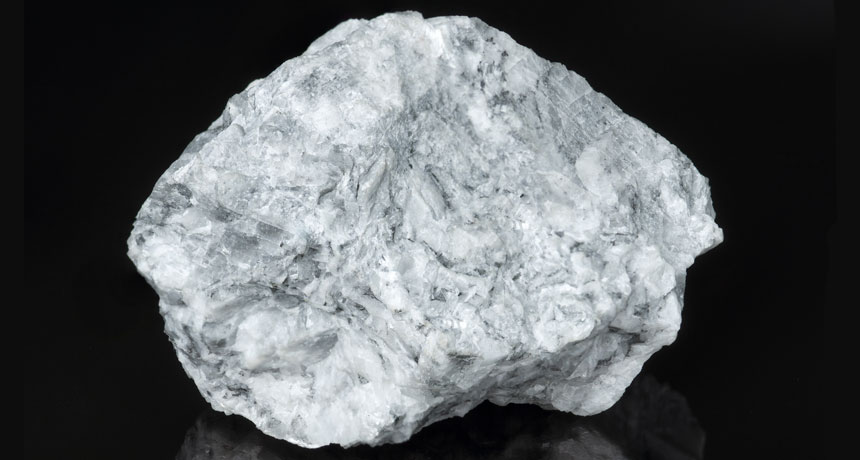
Many other carbonate minerals react with hydrochloric acid. Each of these minerals consists of one or more metal ions combined with a carbonate ion (CO3—). The chemistry of these reactions is similar to the calcite reaction above. The mineral reacts with hydrochloric acid to produce carbon dioxide gas, water, a dissolved metal ion, and dissolved chlorine. The reactions for magnesite (MgCO3) and siderite (FeCO3) are shown below.