Crystal habit is the tendency for specimens of a mineral to repeatedly grow into characteristic shapes. These shapes are influenced by the atomic structure of the mineral, but they can also be influenced by the environment of crystal growth.
Regardless of influence, crystal habit shapes can be characteristic of the mineral and displayed by many specimens of that mineral from diverse locations. Some examples:
Botryoidal: malachite and hematite
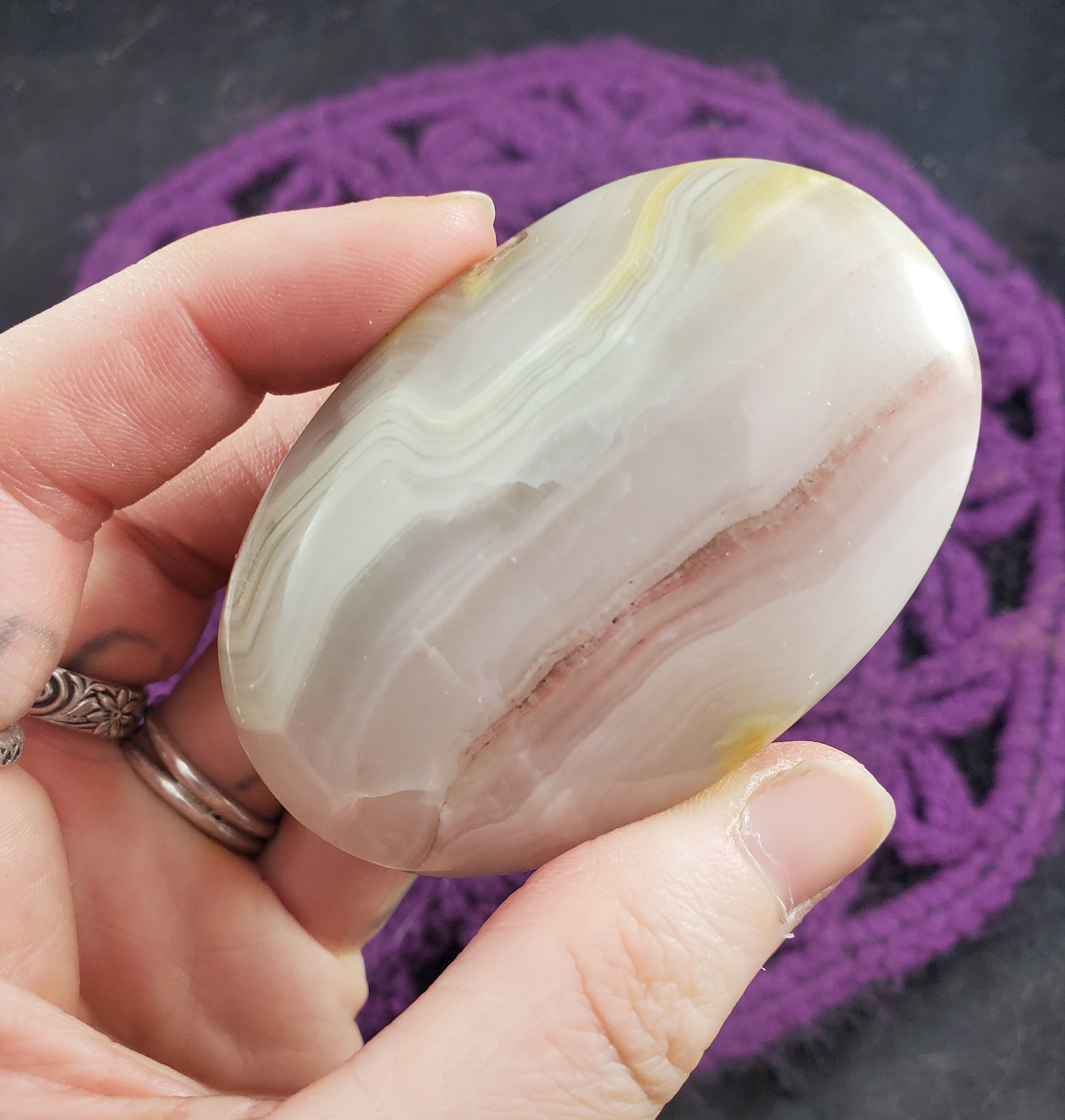
Banded: rhodochrosite and fluorite
Striated: tourmaline and beryl
Acicular: rutile, millerite, and tourmaline
Dendritic: copper and pyrolusite
Nodular: quartz, azurite, and hematite
Prismatic: quartz, beryl, and tourmaline
Crystal habit is an external shape displayed by an individual crystal, but more often it is an external shape displayed by an aggregate of crystals. Crystal habit names are often adjectives that help convey the shape of a crystal or a group of crystals.
Bladed, cubic, fibrous, granular, prismatic, and radiating are names of crystal habits that quickly convey a generalized geometric appearance. Other crystal habit names are less familiar, but once a person learns the name it can easily be applied to mineral specimens to which that habit applies.
Many minerals have characteristic habits which can serve as clues to their identification. However, many minerals do not have a characteristic external shape, and the name of this habit is “massive”. In addition, most specimens of any mineral do not display a characteristic habit.
In rare instances, one mineral might replace crystals of another mineral to assume its characteristic habit. Crystals formed in this situation are known as pseudomorphs.
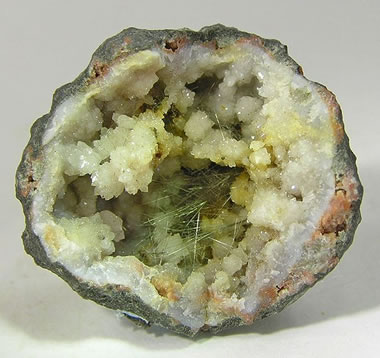
Banded minerals have narrow layers or bands of different color and/or texture. These may be a response to changes in the composition of the growth liquid, the sedimentary process, or other conditions. Mineral examples: quartz (agate), malachite, rhodochrosite, and fluorite. The photo above shows rhodochrosite cabochons that display a banded habit. In one of the cabochons, the banded habit is actually an internal feature of a stalactitic habit. The cabochons were cut from material mined in Argentina, and the cabochon on the left is about two centimeters in length. Acicular crystals have a needle-like shape that tapers to a point or a blunt termination. Many acicular crystals can be clustered to produce fan-shaped or radially-shaped aggregates. The name acicular should be used when the length of an individual crystal is much greater than its width or diameter. Mineral examples include rutile, natrolite, millerite, and gypsum. This geode found in Kentucky contains thin needle-like crystals of millerite. This specimen is also a good example of the geodic habit.
What Is Crystal Form?
“Crystal form” is a concept similar to “crystal habit”.
A crystal form is a solid crystalline object that is bounded by a set of flat faces that are related to one another by symmetry. Euhedral crystals are the best representations of a crystal form. Examples include:
Cubic crystals of halite or fluorite
Octahedral crystals of diamond or fluorite
Dodecahedral crystals of garnet
Six-sided crystals of quartz or corundum
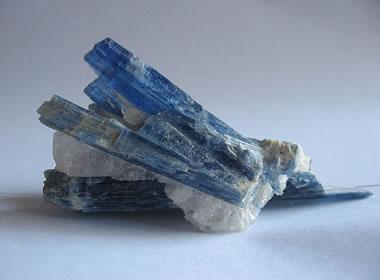
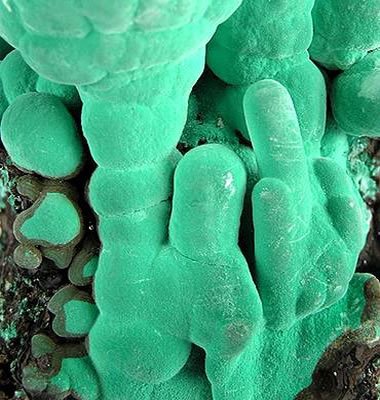
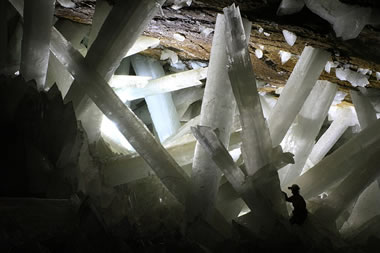
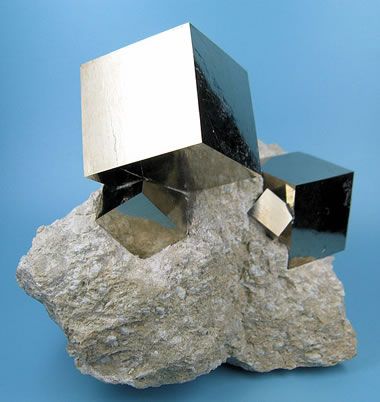
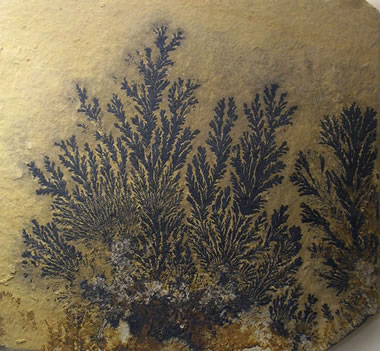
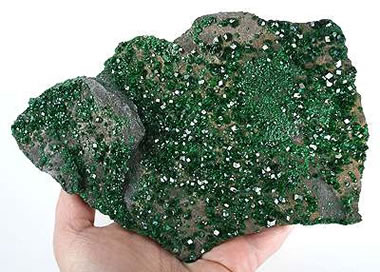
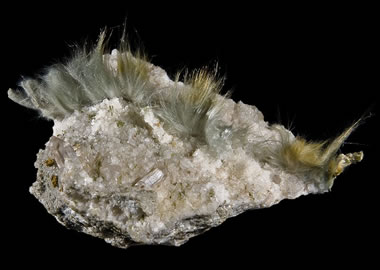
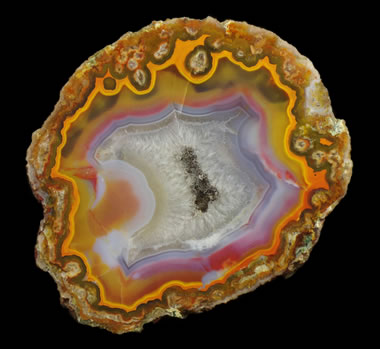
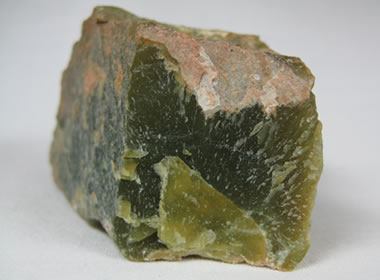
Bladed crystals are elongated. They are much longer than they are wide, and their width exceeds their depth. They are shaped like a straight sword or knife blade. Their ends sometimes taper to a point. They might exist as single crystals, a cluster of many parallel crystals, or radiating clusters of crystals. Mineral examples: kyanite, actinolite, and stibnite. These blue crystals of kyanite have a bladed habit. Kyanite crystals are interesting because they have a hardness of 4.5 to 5 parallel to the length of their blades, and a hardness of 6.5 to 7 across the width of their blades. This specimen is approximately seven centimeters across. Image by Aelwyn, used here under a Creative Commons License. Botryoidal (also known as globular or mammillary) is derived from the Greek word botrys, which means “bunch of grapes”. This habit name is used for crystal aggregates that have a globular or rounded shape. Mineral examples: hematite, malachite, smithsonite, hemimorphite, variscite, quartz (chalcedony), quartz (grape agate), and goethite. These green crystal aggregates of malachite have a botryoidal habit. This view spans an area of the specimen approximately five millimeters across.Columnar crystals are long prisms with enough width that the name acicular (or needle-like) does not apply. A single “column” might contain multiple parallel crystals. Mineral examples: calcite, tourmaline, and gypsum. These enormous crystals of selenite gypsum have a columnar habit. They are in the “Cave of the Crystals” cavern, Chihuahua, Mexico (a person in the lower-right quadrant of the photo serves as scale). These are some of the largest well-formed crystals in the world. The photo is a Wikimedia OTRS image by Alexander Van Driessche. Cubic crystals of pyrite. Fluorite and halite are two common minerals with a cubic shape. Cubes have six square faces and four-fold rotational symmetry around three axes. The photo shows cubic crystals of pyrite from Navajún, Rioja, Spain, that have grown in a marlstone. Specimen is approximately 4 inches (9.5 centimeters) across. Image by Carles Millan and used under a Creative Commons license. Dendritic crystals form a branching pattern, much like the branches of a tree, the veins in a leaf, or the branching pattern of streams in a drainage basin. Mineral examples: copper, pyrolusite, and other manganese oxide minerals. These crystals of pyrolusite formed on a bedding surface of a piece of lithographic limestone collected near Solnhofen, Germany. The image is a public domain photograph created by Aram Dulyan at the Natural History Museum of London. Drusy is a habit name used for a surface that is covered with small crystals. The crystals themselves are referred to as a druse. Quartz is the most common mineral found as a druse. Other mineral examples: uvarovite garnet, malachite, and azurite. The rock in the photo above has a drusy surface because it is covered by a layer of uvarovite crystals. This rock was collected from the Saranovskii Mine, located in the Urals region of Russia. It is approximately 18 x 13 x 2 centimeters in size. Fibrous is a habit name used when minerals occur in very fine fiber-like crystals. They are often so fine that they look like fine hair. The habit also includes aggregates made up of a large number of parallel or radial fibers. Mineral examples: actinolite, chrysotile, serpentine, and tremolite. The actinolite crystals on this rock have a fibrous habit. Because of their fibrous shape (a roughly 1:20 aspect ratio) and properties, fibrous crystals of actinolite are regulated as asbestos.Geodic is a habit in which mineral aggregates form a rounded or oblate mass by crystallization on the inside walls of a cavity. Concentric bands or layers of mineral crystals subsequently develop, gradually infilling the cavity without infilling it completely and with a crystal-lined central void. The specimen in the photo is a geode formed by the precipitation of banded agate to form the external wall and initial layers. The center of the geode is lined with quartz crystals.Massive is the habit name used for masses of crystals that have no distinctive geometry. Most specimens of almost every mineral do not exhibit an obvious habit or obvious crystal form. Shown above is a specimen of lizardite serpentine from Wayne County, New York. The piece has no visible internal structure or characteristic external shape.
 Banded: rhodochrosite and fluorite